Pipe Relining Cost: What You're Paying For and Is It Worth It
Relining is priced by the metre, but length is only part of it. Here's what moves a relining quote, how it compares with digging, and when it's worth it.
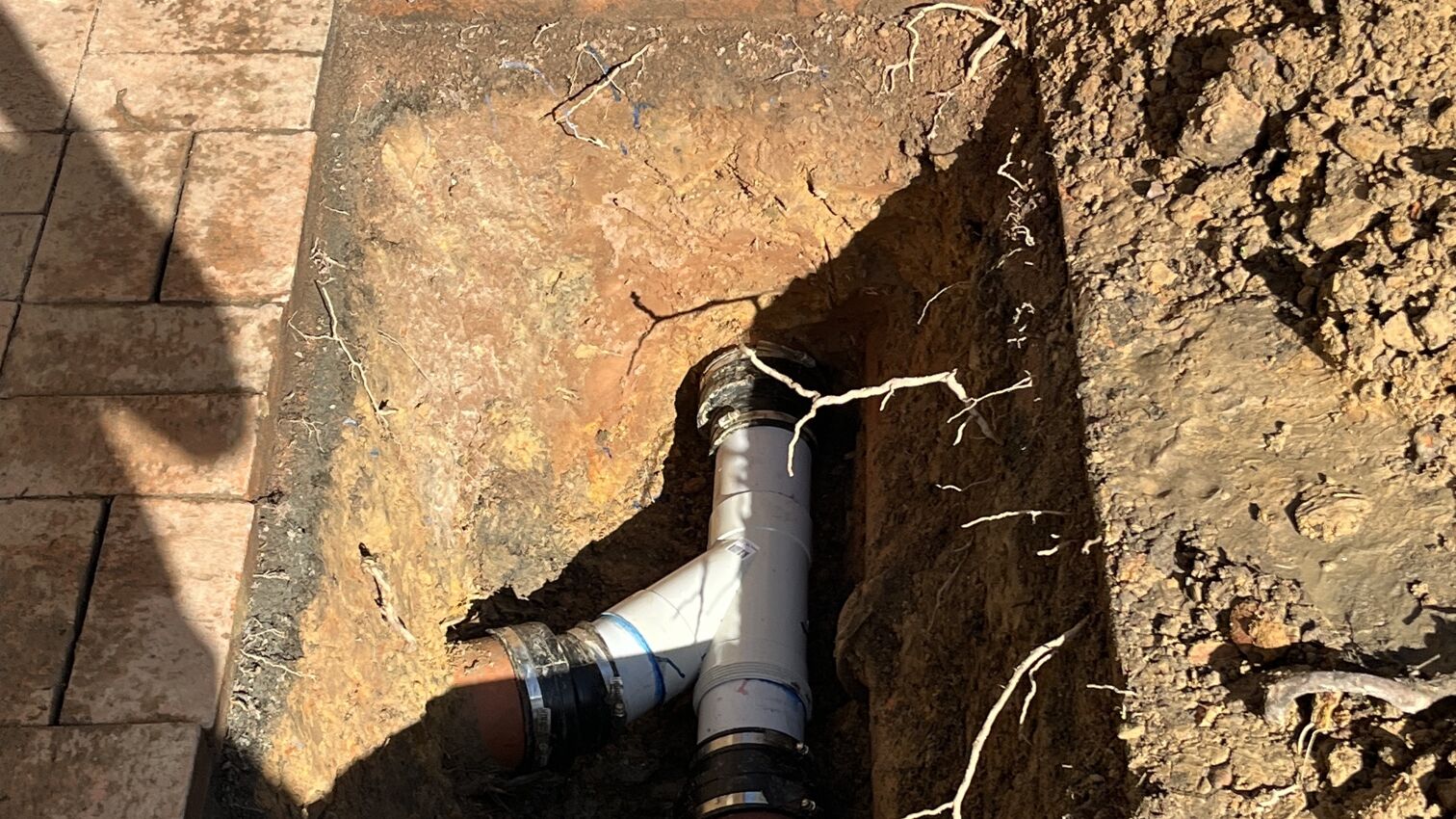
The pipe relining cost for your drain comes down to a handful of things you can actually see on a camera: how much of the pipe is damaged, how wide it is, how many branch lines join it, and how easy it is to get into. Relining is priced by the metre, so length matters most, but it's rarely the only factor.
The other half of the question is what you'd be paying for instead. A relining quote should always be read against the full cost of digging the pipe up and putting everything back on top of it.
Here's what goes into the number, and how to tell whether relining is the right call for your drain.
What is pipe relining?
Relining is a no dig pipe repair. A resin-saturated liner goes into the damaged pipe through an existing access point, gets inflated against the pipe wall, and cures in place. What's left is a new, seamless pipe formed inside the old one.
The point of it is that the new pipe has no joints. Roots get into sewers at joints and cracks, so once a line is lined, there's nothing left for them to find.
Access is usually through an inspection opening or boundary trap. Occasionally we need one small dig at one end to get the liner in, but that's a hole, not a trench across the yard.
Pipe relining cost: what goes into the quote
We don't publish a figure, and you should be wary of anyone who gives you one before a camera has been down the line. Two drains with the same symptom can be completely different jobs.
What we can tell you is exactly what the quote is built from. Every one of these is visible on the camera footage, which is why the inspection comes before the price.
Length of the damaged section
This is the biggest single factor. If the damage is a two-metre section around one cracked joint, we line two metres. If the whole run from the house to the boundary is fractured and root-riddled, that's the whole run.
Partial relines are common. There's no reason to line pipe that's in good condition.
Pipe diameter
Most house drains are one of two or three standard sizes, but the main sewer line out to the street is wider than the branch lines from a basin or shower. A wider pipe takes a larger liner and more resin per metre.
Junctions to reinstate
Every branch that joins the line, from the kitchen, laundry, bathroom or a downpipe, gets sealed over when the liner goes in. Each one then has to be reopened from the inside with a robotic cutter so it drains properly again.
More junctions means more cutting and more time. It's also the step that separates good relining work from bad: a junction that isn't reinstated properly becomes your next blockage.
Access points
A line with a clear inspection opening at each end is straightforward. A line with no usable access, or access buried under a later extension or a paved area, means more setup work before the liner can go in.
How much cleaning and root cutting is needed first
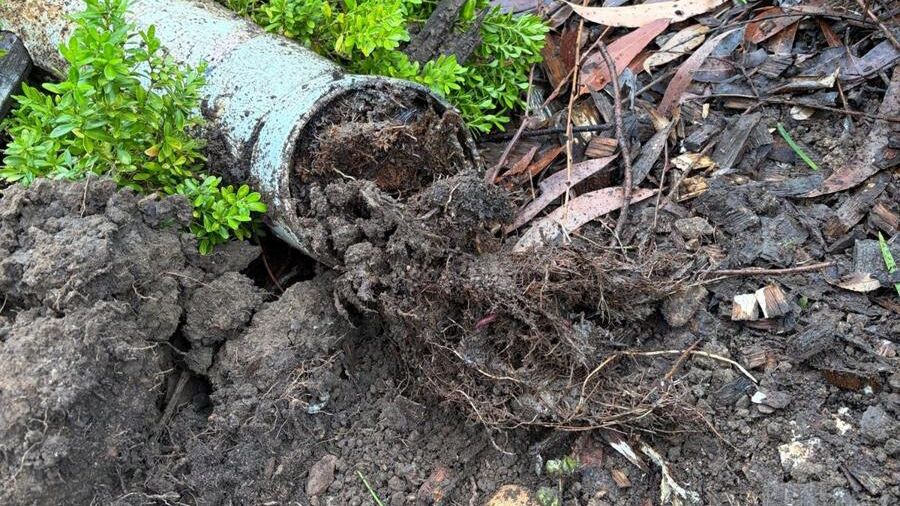
A liner only bonds to a clean pipe. A line that's been lightly root-affected needs a jet and a cut. A line that's been choked with roots for years, with scale and debris built up behind them, takes a lot longer to prepare.
This is common in Castle Hill, Baulkham Hills and Pennant Hills, where 1960s to 80s clay sewers sit under decades of jacaranda, liquidambar and camphor laurel roots. Our post on tree roots in pipes covers why they end up there.
Condition of the host pipe
Cracks, offset joints and corroded cast iron all reline well. A section that has collapsed, with no bore left for the liner to form against, can't be relined and needs to be dug out. The camera tells us which you've got.
Pipe relining vs replacement: comparing the real cost
A digging quote and a relining quote aren't measuring the same thing. The invoice for excavation covers the trench, the new pipe, and the backfill. It usually doesn't cover what was sitting on top of the pipe.
| Relining | Excavation | |
|---|---|---|
| What gets disturbed | Usually nothing, occasionally one small access hole | A trench along the damaged section |
| Typical time on site | Most residential jobs done in a day | Often several days, plus reinstatement |
| Driveways, paths, paving | Stay where they are | Cut out and relaid, usually by another trade |
| Gardens and trees | Untouched | Dug through, and roots may be cut |
| New joints in the line | None | Yes, at each connection |
| When it's the wrong choice | Collapsed pipe, or a line laid at the wrong fall | Short run under open lawn with easy access |
The cost of disruption
On a typical Hills District block, the drain doesn't run under open lawn. It runs under the driveway, the pool surround, the side path, or the garden bed that took ten years to establish. Concrete has to be cut, removed and repoured. Pavers have to be lifted and relaid. Retaining walls sometimes have to come out.
None of that is plumbing, and much of it isn't on the plumber's quote. It turns up later from the concreter, the landscaper, or you.
Is pipe relining cheaper than digging up the pipe?
Usually, and the gap widens the harder and more finished the surface above the pipe is. Under a stamped concrete driveway or a pool surround, relining nearly always wins once you count reinstatement.
Under open lawn with easy access, a short dig can occasionally be the cheaper option. We'll tell you if that's your situation, and it's why we quote relining against excavation rather than only quoting one. Our how we price page explains that approach in more detail.
Is pipe relining worth it?
It's worth it when the alternative is repeating the same repair.
If you're clearing the same drain every few months, that's the clearest sign. Each clean removes the roots, but the crack or joint they came through is still there, and they grow back. You're paying for a permanent repair in instalments without ever getting one. If you're weighing up another clear-out, our guide to blocked drain cost explains what goes into that price.
Relining is also worth it when:
- the pipe runs under a driveway, slab, pool or established garden
- the camera shows cracks, fractures or offset joints across more than one spot
- you're seeing wet patches or sinking ground in the yard
- you're about to renovate or landscape over the line
It's not worth it for a single blockage in an otherwise sound pipe. That's a clear, and we'll tell you so.
How long does pipe relining last?
The liner is rated for 50 years, and we warrant it for that period. Because the finished pipe has no joints, the thing that destroyed the original line doesn't have anything to work with.
That's the comparison worth making. A root clear buys you months. A reline, done properly with every junction reinstated, is the last time that section of pipe needs work.
What you can check yourself, and what needs a plumber
There's a fair bit you can do before anyone comes out, and it helps us give you a more accurate range on the phone.
What you can safely do yourself:
- note which fixtures are slow or blocking, and whether it's one or several
- find your inspection opening or boundary trap and check it's not overflowing
- note where the line likely runs and what's on top of it: lawn, driveway, pool, garden
- keep a rough record of how often the drain has been cleared
What needs a licensed plumber:
- the camera inspection and measurement of the damage
- any root cutting or high-pressure jetting
- the relining itself and the junction reinstatement
- any excavation or connection to the Sydney Water sewer
If a drain is overflowing right now, start with our blocked drain or toilet help page for what to do in the meantime.
The camera inspection is what makes the price fixed
Your pipe relining cost is set by what the camera finds, so every quote we give starts with a camera down the line. We measure the damage, count the junctions, check the access, and mark the location on the surface. You see the footage, so you know exactly what you're paying for and why.
From that, you get a fixed price before any work starts. There's no call-out fee and no charge to quote, and the number on the quote is the number on the invoice. If we find something that changes the job, we stop and talk to you first.
If your drain keeps blocking in the Hills District, Hornsby Shire or the Upper North Shore, have a look at our pipe relining and no-dig drain repair service for how the job runs from inspection to final footage, then give us a call.
Frequently asked questions
It's priced mainly by the metre, then adjusted for pipe diameter, the number of junctions to reinstate, access, and how much root cutting the line needs first. We quote a fixed price from camera footage, with no charge to quote.
Usually, especially under driveways, paving, pools or established gardens, because relining avoids reinstating what's on top. Under open lawn with easy access a short dig can occasionally be cheaper, and we'll tell you if that's the case.
The liner is rated for 50 years and we warrant it for that period. The finished pipe has no joints, so roots have nothing to get into.
Most clay, PVC, cast iron and concrete pipes can. A pipe that has fully collapsed, or one laid at the wrong fall, needs excavation instead, and the camera inspection shows which situation you're in.
Need pipe relining sorted?
We’re licensed local plumbers covering the Hills District, Hornsby Shire and the Upper North Shore. No call-out fee, fixed price before we start, lifetime labour warranty.
About the author
Precision Pipes · Licensed Plumber & Gas Fitter
Precision Pipes has been providing plumbing and gasfitting services across the Hills District, Hornsby Shire and the Upper North Shore for 16 years. Fully licensed, fully insured, and backed by a lifetime labour warranty.