Blocked Stormwater Drain: Causes, Fixes and Who's Responsible
Water pooling in the yard or pouring out of a pit in a storm? Here's what blocks stormwater, what you can clear yourself, and where your responsibility ends.
A blocked stormwater drain is usually leaf litter or silt packed into the pit or the first few metres of pipe, and a lot of the time you can clear that yourself with gloves and a garden hose. If the pit is clear and water still won't get away, the blockage is further down the line (roots, a collapsed section or compacted silt) and it needs a plumber with a jetter and a camera.
Whose problem it is depends on where the blockage sits. Everything inside your boundary is yours; the kerb, gutter and street pits belong to the council.
Stormwater and sewer are two separate systems
Your house has two drainage systems that should never meet.
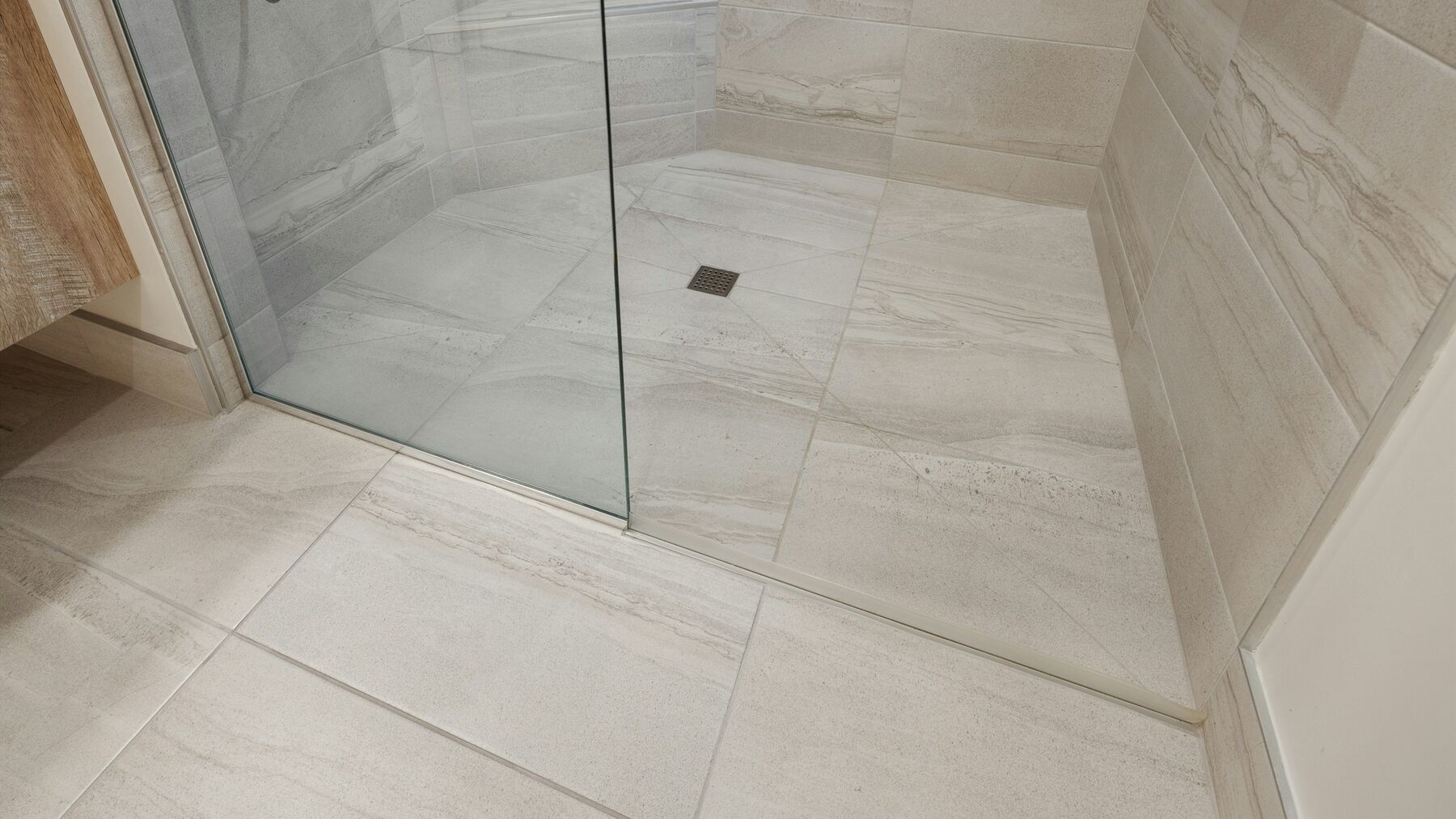
The sewer takes everything from toilets, showers, basins, the kitchen and the laundry, and runs to Sydney Water's sewer main (or a septic system on acreage). Stormwater takes rain: roof water through the gutters and downpipes, and surface water from paving and driveways through pits and grated drains. It goes to the street kerb, an absorption trench or a drainage easement, depending on what the council allowed when the house was built.
Rainwater pushed into the sewer overloads it in a storm and forces sewage out through overflow points, and sewage in the stormwater goes straight into the creeks. Connecting the two isn't allowed.
This matters for diagnosis. Water backing up in the shower or a toilet that won't flush is a sewer problem, covered in our guide to clearing a household drain. Water spilling out of a grated pit in the yard, or gutters overflowing because the downpipe can't drain, is stormwater.
What causes a blocked stormwater drain
Leaves, gum nuts and bark
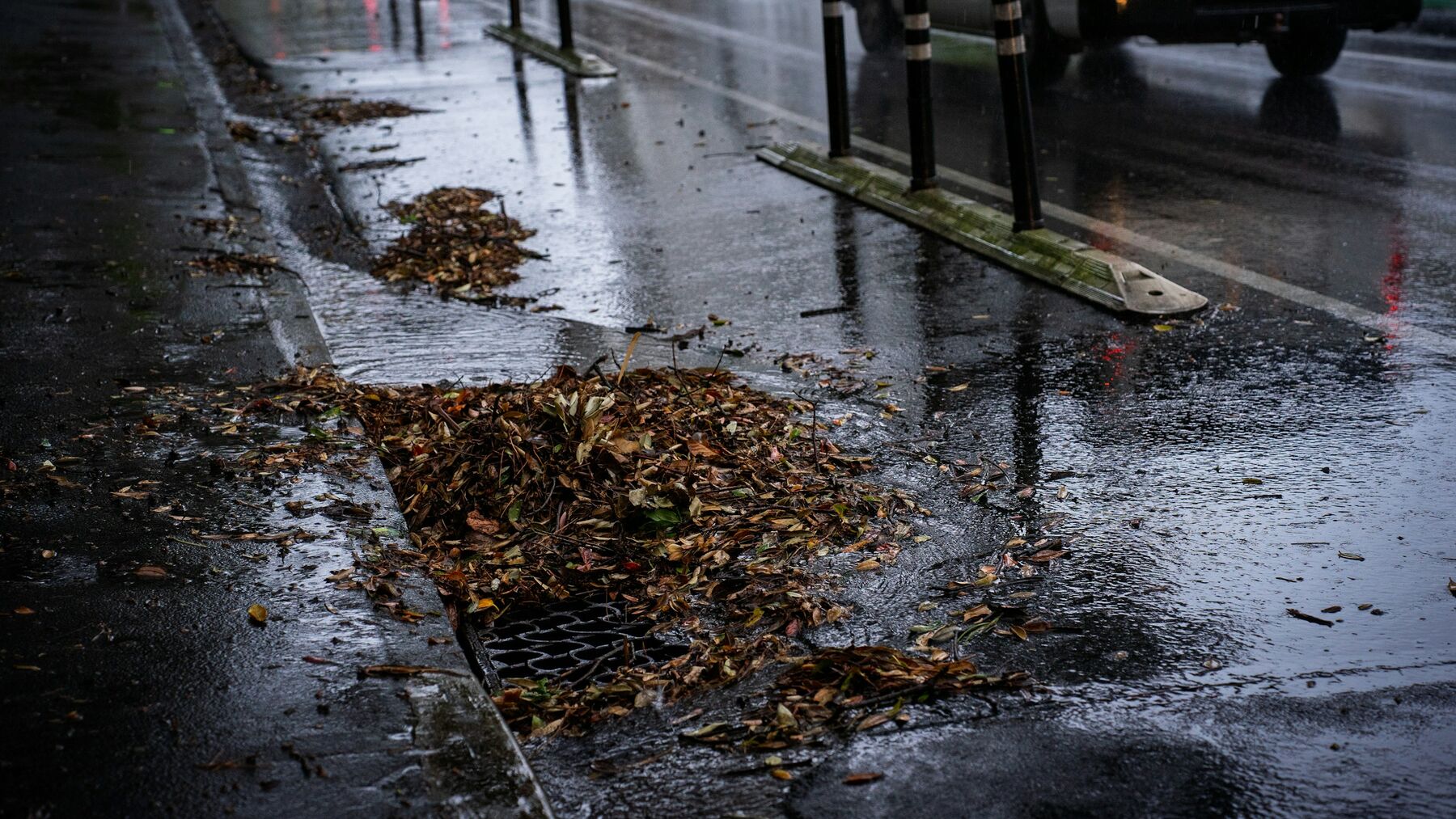
This is the big one across the Hills District and the Upper North Shore. Established gums, jacarandas and liquidambars drop a remarkable volume of material, and all of it ends up in the gutters and then in the pits. In suburbs like St Ives and Wahroonga, a pit can fill in a single autumn.
Leaves mixed with silt and gum nuts compact into a mat that seals the pit outlet.
Silt and soil from sloping blocks
Sloping blocks shed soil every time it rains hard. The silt settles in the pit and then in the low points of the pipe, and over a few years it takes a surprising share of the pipe's capacity. Small estate blocks in Kellyville and The Ponds, with landscaping still settling, do the same thing.
Tree roots
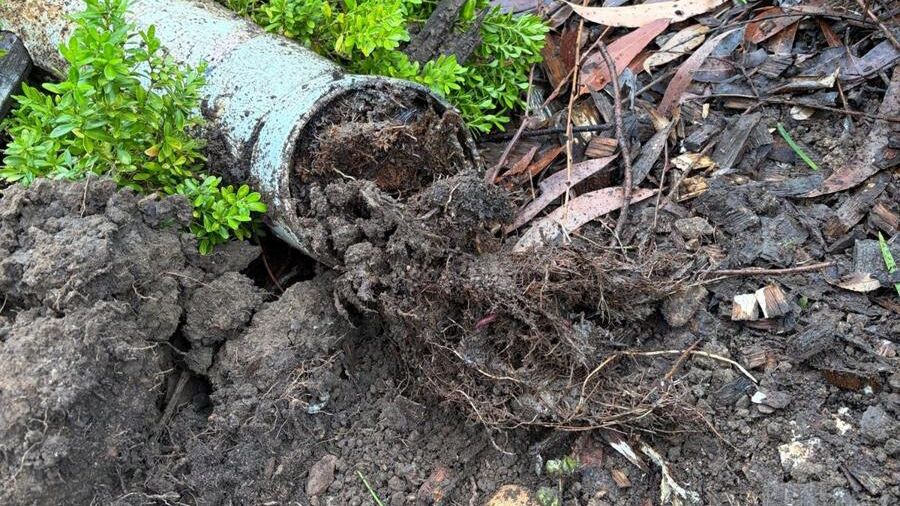
Can tree roots block stormwater pipes? Yes, and they do it the same way they get into sewers. Older homes around Castle Hill, Baulkham Hills and Pennant Hills often have earthenware stormwater lines with mortar joints, and roots find those joints because the pipe carries water and the soil around it stays damp. Our post on tree roots in pipes covers how that happens and what the options are.
Collapsed or broken pipe
Earthenware cracks and shifts as clay soil swells and shrinks. A section that has dropped or broken lets soil in and stops water getting out, and no amount of clearing from the pit end will fix it.
Things that shouldn't be in there
Pool backwash plumbed into the stormwater (it should go to sewer) carries sand and filter media into the line. So do building works where someone hosed cement slurry or tile offcuts into a pit.
Why does my stormwater pit overflow in heavy rain?
If a pit overflows only in a genuine downpour and drains within an hour or so afterwards, the system may simply be at capacity. Plenty of older lines were sized for a house with less roof and much less paving than it has now.
If it overflows in moderate rain, drains slowly, or holds water for days afterwards, something is restricting it. The usual order of suspects:
- The pit itself is full of silt and leaves
- The outlet from the pit is blocked just inside the pipe
- A charged line has lost its fall to debris (more on that below)
- Roots or a collapsed section further along
- The kerb outlet at the street is blocked or buried
A charged line is common on sloping blocks where the house sits below the street. Downpipes drop into a pipe that runs underground and then rises to the kerb, so the line sits full of water between storms. Leaves and silt settle in the low section, and eventually it can't push water up and out.
Don't ignore an overflowing pit. Water that can't get away finds the next path, which is usually against the footings or into the sub-floor.
How do I unblock a stormwater drain?
Start at the pit and work outward. Most of what's safe for a homeowner to do happens within arm's reach of the grate.
What you can safely do yourself
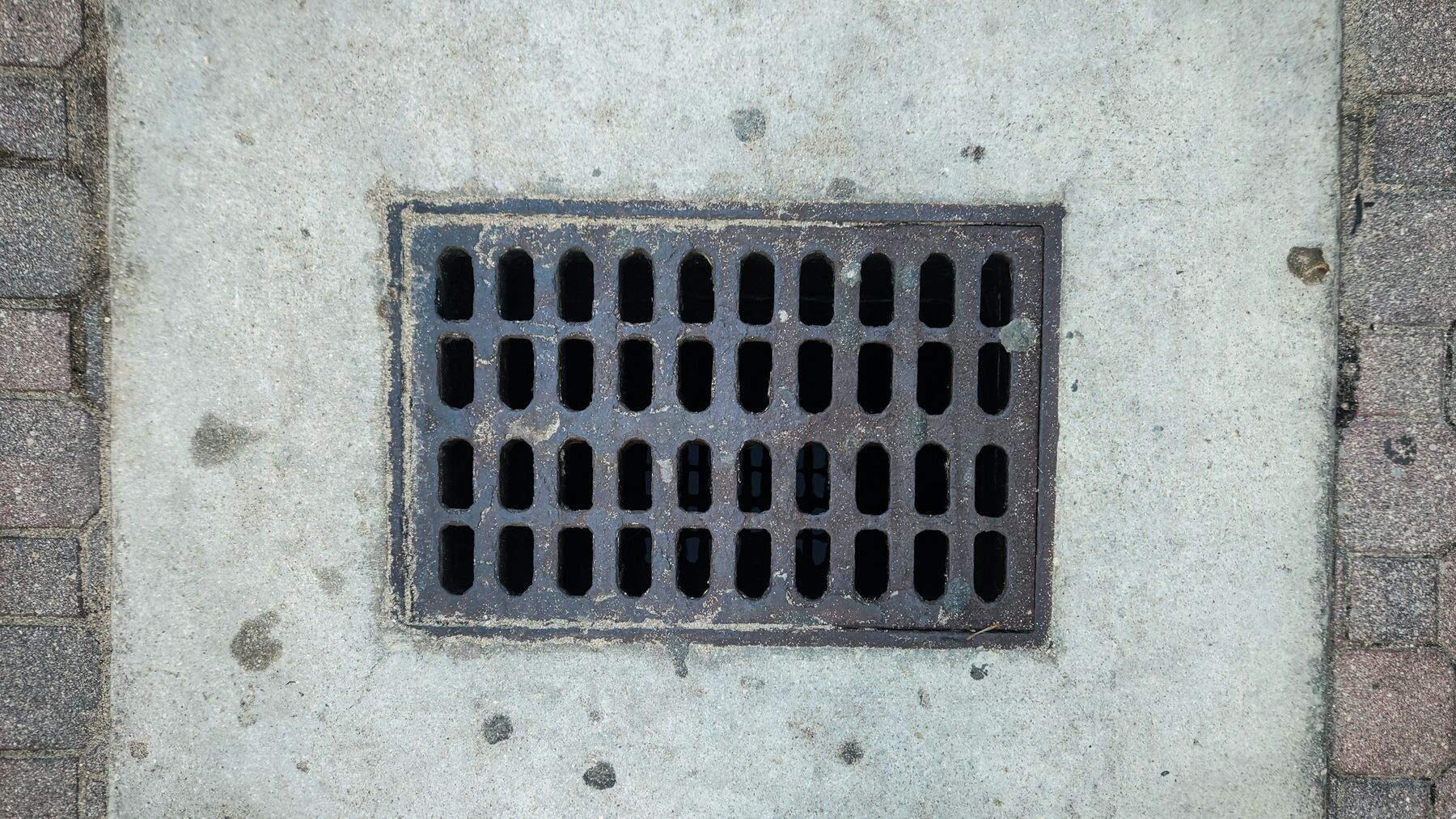
- Lift the grate and scoop out leaves, silt and gum nuts by hand (gloves on, and watch for spiders and snakes in bush-edge suburbs)
- Clear the outlet where the pipe leaves the pit, as far as you can reach
- Run a garden hose into the outlet at full pressure to see whether water gets away
- Clean the gutters and check the downpipes aren't packed at the bottom
- Check the kerb outlet at the street isn't buried under leaves or soil
- Fit leaf guards and pit baskets once it's clear, so it stays that way
A hand-held drain auger from the hardware store will sometimes shift a leaf plug in the first metre or two. Stop if it snags or comes back with roots on it.
What needs a licensed plumber
- Any blockage you can't reach from the pit
- Roots, or anything that suggests a broken pipe (soil or clay coming out of the line)
- Charged lines that won't clear with a hose
- Pits that keep blocking within weeks of being cleaned
- Anything involving digging, new pits or changes to where the water discharges
We clear stormwater with a high-pressure water jetter, which cuts through compacted silt and roots and flushes them out. Afterwards we run a camera through the line to see its condition and whether anything is broken.
How do I find the stormwater pipes on my property?
- Follow the downpipes. Each one goes into the ground and joins the stormwater line, usually heading toward the lowest point of the block or the street.
- Look for grated pits, inspection openings and the outlet in the kerb. The line generally runs in reasonably straight lines between them.
- Check your property's drainage diagram. For stormwater, the council's approved plans for the house are often the best record, and your conveyancing paperwork may note any drainage easement.
- Ask a plumber to trace it. A camera with a locator sender lets us mark the line and its depth on the ground, which is worth doing before any landscaping, pool or extension.
Who is responsible for a blocked stormwater drain?
The dividing line is generally the property boundary.
| Where the blockage is | Who usually looks after it |
|---|---|
| Gutters, downpipes, pits and pipes inside your property | You, as the owner |
| The pipe through the kerb and the kerb outlet itself | Often the owner's to keep clear, check with your council |
| Street gutters, public pits and council drainage lines | The council |
| An inter-allotment drainage easement | Usually shared by the properties that use it |
| Common lines in a strata or community title | The owners corporation |
The councils across our area are The Hills Shire Council, Hornsby Shire Council and Ku-ring-gai Council. Each one sets, through its development control plan, where stormwater from a property is allowed to go (kerb, absorption trench or easement), and that decides what any upgrade to the system is allowed to look like. If a street pit is blocked and water is backing onto your property from the road, that's a job to report to the council rather than one to pay a plumber for.
Easements are where it gets muddy. If your stormwater runs through a neighbour's yard, the title documents set out who maintains it. We can tell you which side of the boundary a blockage is on, which usually settles it.
When it's more than a blockage
If the camera shows a cracked or collapsed stormwater line, the options are to dig it up and replace the section, or to reline it from the inside. Relining avoids digging through driveways and gardens and is often the only sensible approach where the pipe runs under trees protected by council. Our pipe relining page explains how it works.
The price for any of this depends on how easy the line is to reach, how long and deep it is, how bad the blockage is, and whether it's an after-hours call. There's no call-out fee and no charge to quote, and the price is fixed before work starts. Our how we price page sets out how that works.
Getting your stormwater flowing again
If you've cleared the pit and the water still won't get away, or it keeps coming back every time it rains, it needs jetting and a look with the camera. We clear stormwater and sewer lines across the Hills District, Hornsby Shire and the Upper North Shore, and we'll show you the camera footage so you can see what was in there. Have a look at our blocked drain clearing service for what's involved.
Frequently asked questions
Gutters, downpipes, pits and pipes inside your property are the owner's responsibility. Street gutters, public pits and council drainage lines are the council's, so a blocked street pit should be reported to The Hills, Hornsby or Ku-ring-gai council.
Yes. Roots find the joints in older earthenware stormwater lines just as they do in sewers, because the pipe keeps the soil around it damp. They need to be cut out with a jetter, and a camera inspection shows whether the pipe is damaged.
No. Stormwater and sewer must stay separate. Rainwater in the sewer overloads it during storms and pushes sewage out through overflow points, so any cross-connection has to be removed.
Usually because the pit or the pipe leaving it is partly blocked with silt, leaves or roots. If it only overflows in extreme downpours and drains quickly afterwards, the line may simply be undersized for the roof and paving now draining into it.
Need blocked drains sorted?
We’re licensed local plumbers covering the Hills District, Hornsby Shire and the Upper North Shore. No call-out fee, fixed price before we start, lifetime labour warranty.
About the author
Precision Pipes · Licensed Plumber & Gas Fitter
Precision Pipes has been providing plumbing and gasfitting services across the Hills District, Hornsby Shire and the Upper North Shore for 16 years. Fully licensed, fully insured, and backed by a lifetime labour warranty.