Pressure Limiting Valves: Do You Need One?
What a pressure limiting valve does, why some Sydney homes sit well above the 500 kPa limit, and the signs your pipes, hoses and hot water system are paying for it.
A pressure limiting valve is a small brass valve that caps the water pressure coming into your house so it never goes above a set level, usually 500 kPa. If your mains pressure is higher than that, the plumbing code says you need one. Plenty of homes that need one either don't have it or have one that stopped working years ago.
Here's what it does, how to tell whether your pressure is too high, and what happens when the valve fails.
What does a pressure limiting valve do?
Sydney Water delivers water through the mains at whatever pressure the network happens to have at your address. That pressure isn't set for your house. It's set so the water reaches the highest homes in the zone.
The valve sits on your supply line and takes that incoming pressure down to a fixed maximum. Upstream of the valve, the pressure is whatever the street gives you. Downstream, it can't exceed the valve's setting, no matter how high the mains climbs overnight when demand drops.
You'll also hear it called a water pressure reducing valve or just a pressure reducing valve. In a house they do the same job. Trade usage sometimes separates them (a limiting valve has a fixed setting, a reducing valve can be adjusted), but for a homeowner the question is the same: is there something controlling the pressure, and is it working?
What is the maximum water pressure allowed in a house?
The plumbing code, AS/NZS 3500, sets a maximum of 500 kPa static pressure at any outlet inside a building. Static means with every tap closed, which is when pressure is at its highest.
Tapware, flexi hoses, dishwasher and washing machine inlet valves, and mains pressure hot water systems are all designed around that limit. Run them above it and they still work. They just wear out faster, and some fail in ways that let water loose inside the house.
New homes are supposed to have a limiting valve fitted where the supply exceeds 500 kPa. Older homes were often plumbed before anyone checked, or had the valve left out when the pressure in the street was lower than it is now.
Why some Hills and Hornsby homes run so high
Mains pressure depends a lot on how far your house sits below the reservoir that feeds it. The Hills District and Hornsby Shire are full of ridges and valleys, and a house down in a gully can see considerably more pressure than one on the ridgeline a few streets away.
We see it regularly in the lower streets around Castle Hill, Cherrybrook, Hornsby Heights and down towards the creeks in West Pennant Hills. The house up the hill is fine. The one at the bottom of the slope is quietly cooking its flexi hoses.
Pressure also rises at night. With the whole suburb asleep and nobody drawing water, the mains climbs, which is why a lot of high-pressure failures seem to happen at 2am.
Signs of high water pressure
You can't feel the difference between 500 and 800 kPa at the kitchen tap, but the house tells you in other ways:
- Taps that spit or blast when you open them, especially first thing in the morning
- Banging or shuddering pipes when a tap or appliance valve closes quickly (see our guide to water hammer causes and fixes)
- Dripping taps that come back soon after new washers go in
- Toilet cisterns that keep running because the inlet valve can't seal against the pressure
- Flexi hoses under sinks with bulges, rust spots or frayed braiding
- The hot water system relief valve dripping or running constantly
- Washing machine or dishwasher inlet valves failing well before their time
One of these on its own might be something else. Two or three together and it's worth getting the pressure tested.
What high pressure does to your plumbing
Flexi hoses
The braided hoses that connect taps and toilets to the wall are the weakest point in most houses. They're rated for normal mains pressure, and the stainless braiding protects a rubber hose inside. Keep them above the limit for years and that inner hose fatigues. When one lets go, it doesn't drip. It floods, usually inside a vanity or behind the toilet where you don't see it until it's through the floor.
Tapware and appliance valves
Ceramic cartridges and washers wear faster under high pressure, and the solenoid valves on washing machines and dishwashers take a hammering every time they snap shut. Replacing parts that shouldn't have worn out yet is often the first sign.
Hot water relief valves
A mains pressure hot water system has a temperature and pressure relief valve that opens when the tank gets too hot or too pressurised. If the incoming pressure is already close to the relief valve's setting, normal heating expansion pushes it over and the valve discharges water all day. Most installers fit a separate limiting valve on the cold inlet to the hot water unit for exactly this reason. If yours is dripping constantly, our guide to a hot water system leaking covers what's normal and what isn't.
Where is the valve in my house?
There are two common spots.
The main one, if you have it, is usually close to the water meter at the front boundary, just downstream of the meter and the main stop tap. It's a brass valve, often bell-shaped, with an arrow cast into the body showing the direction of flow. If you're not sure where the meter is, here's how to find your water meter.
The second is on the cold water inlet to the hot water system, often in a combined valve assembly with the isolation valve and non-return valve. That one only protects the hot water unit. The rest of the house still gets full mains pressure.
Some homes have both, some only the hot water one, and a surprising number have neither.
Can a failing valve cause low water pressure?
Yes. The valve has a spring and diaphragm inside, and over time sediment builds up, the seat wears and the diaphragm hardens. A failing valve can go either way.
It can stick partly closed and starve the house, so the shower drops to a trickle when someone turns on the kitchen tap. Or it can stop regulating and let full mains pressure straight through, which is the more dangerous failure because you usually don't notice it.
If your problem is weak flow rather than too much pressure, start with our low water pressure help page. It walks through the other causes first, because a failed valve is only one of several.
Do I need a pressure limiting valve?
You need one if your static mains pressure is above 500 kPa. The only way to know that is to measure it.
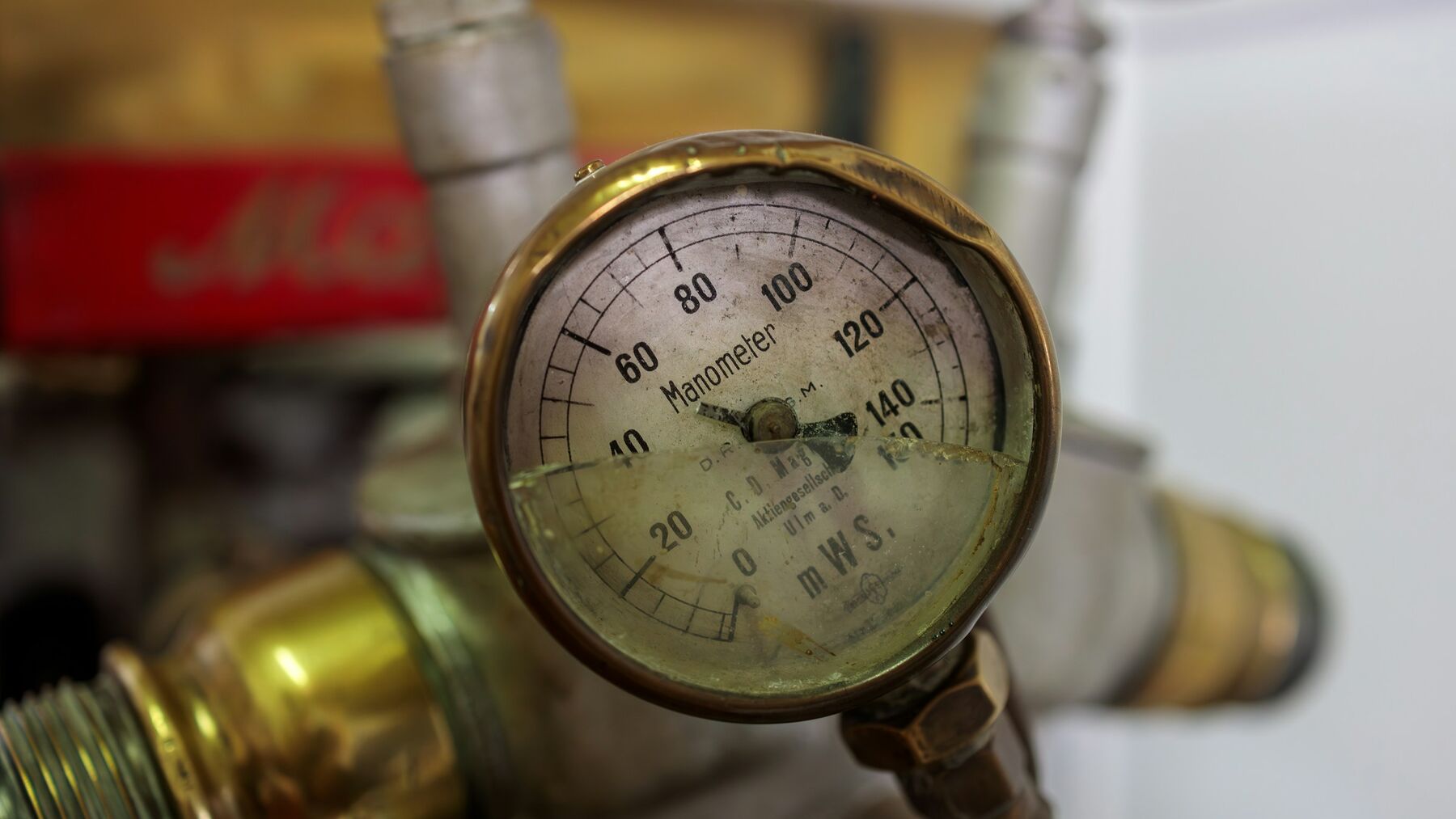
A pressure gauge that screws onto a garden tap will give you a reasonable reading. Test it at the tap nearest the meter, with every other tap in the house off, and ideally early morning or late evening when the mains is highest. If it's over 500 kPa and there's no valve, you need one. If there is a valve and you're still over 500, it has failed.
What you can safely do yourself
- Find the water meter and look for a valve just past it
- Check the cold inlet to the hot water system for a valve assembly
- Take a pressure reading with a gauge on the garden tap
- Look under sinks and vanities for bulging, rusty or frayed flexi hoses
- Turn the water off at the meter if a hose or pipe lets go
What needs a licensed plumber
Fitting, replacing or adjusting a pressure reducing valve is plumbing work on the water supply, and in NSW that means a licensed plumber. The same goes for replacing the relief valve on a hot water system, or swapping the cold inlet valve assembly. It's also worth having a plumber check flexi hoses and relief valves once high pressure has been found, because the damage may already be done.
If the pressure has already done its damage
A burst flexi hose or a failed valve at 2am isn't something to leave until Monday. Turn the water off at the meter, then call us. Our 24/7 emergency plumbing team covers the Hills District, Hornsby Shire and the Upper North Shore. We'll stop the water, fix the failure, test your pressure and fit a pressure limiting valve if you need one. No call-out fee, and a fixed price agreed before we start that doesn't move.
Frequently asked questions
It takes the pressure coming in from the water main and caps it at a fixed level, usually 500 kPa, so taps, flexi hoses, appliances and your hot water system aren't running above what they were designed for.
The plumbing code, AS/NZS 3500, limits static pressure at outlets inside a building to 500 kPa. If your mains supply is higher than that, a pressure limiting valve is needed.
Yes. As they age, sediment and a worn seat or diaphragm can make them stick partly closed and restrict flow. They can also fail the other way and let full mains pressure through, so it's worth testing if anything seems off.
It depends on water quality and how hard the valve is working, but they do wear out. If your pressure reading creeps above 500 kPa with a valve fitted, or flow drops for no other reason, have it checked and replaced by a licensed plumber.
Need blocked drains sorted?
We’re licensed local plumbers covering the Hills District, Hornsby Shire and the Upper North Shore. No call-out fee, fixed price before we start, lifetime labour warranty.
About the author
Precision Pipes · Licensed Plumber & Gas Fitter
Precision Pipes has been providing plumbing and gasfitting services across the Hills District, Hornsby Shire and the Upper North Shore for 16 years. Fully licensed, fully insured, and backed by a lifetime labour warranty.