Leaking Toilet: Base, Cistern or Pipe? How to Tell
Water on the floor around the toilet comes from one of four places. Here’s how to find which one with food colouring and a paper towel, and what to do next.
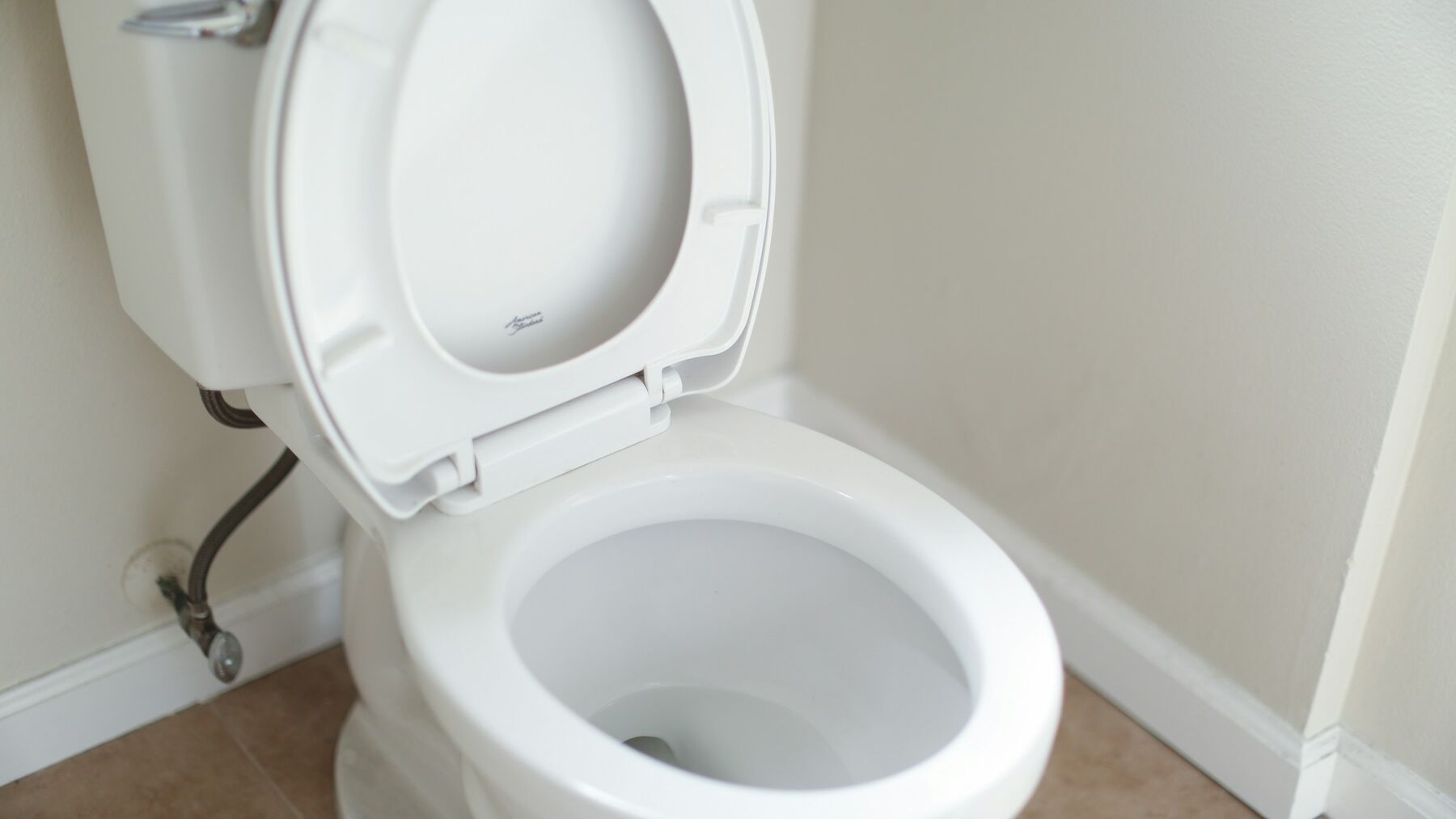
A leaking toilet puts water on the floor from one of four places: the seal at the base where the pan meets the sewer, the cistern itself, the join between cistern and pan, or the water supply coming in. Two simple tests, one with food colouring and one with a paper towel, will usually tell you which within ten minutes.
This post is about water outside the bowl. If the problem is water trickling into the bowl and the cistern never quite going quiet, that’s a running toilet, and it has its own causes and fixes. We cover that on our running toilet help page.
First, make sure it’s actually a leak
In humid weather, a cistern full of cold water sweats. Condensation beads on the outside, runs down, and drips onto the floor in a small puddle that looks exactly like a leak.
Wipe the cistern and pan completely dry. If fine droplets reappear evenly over the whole surface within half an hour, and the bathroom is warm and steamy, it’s condensation. Better ventilation fixes it, and it’s not a plumbing fault.
If the water shows up in one spot, or turns up on a cool dry day, it’s a leak. Keep reading.
The four places a leaking toilet leaks from
The pan connector at the base
The pan sits over a connector (a rubber or plastic sleeve) that joins its outlet to the sewer pipe in the floor or wall. When that connector perishes, splits or gets knocked out of line, a little dirty water escapes every time you flush.
Signs it’s the base: water appears only after a flush, it pools around the foot of the pan, the grout or silicone there is discoloured, and sometimes the toilet rocks slightly when you sit on it. A pan that moves will eventually pull the connector apart, so a loose toilet and a leak at the base usually go together.
The cistern itself
Ceramic cisterns crack. It can be a knock with something heavy, an over-tightened bolt, or just age. A hairline crack below the water line weeps steadily, flush or no flush.
The cistern-to-pan join
On a close-coupled suite, where the cistern sits directly on the back of the pan, there’s a rubber seal and a pair of bolts between the two. When the seal hardens or a bolt washer fails, water escapes at the join during and just after each flush and runs down the back of the pan.
The inlet: stop tap and flexi hose
The water supply comes out of the wall or floor through a small stop tap, then up to the cistern through a braided flexible hose. Either can weep. A stop tap that hasn’t been turned in years often drips from its spindle, and a flexi hose can leak at the nuts at either end.
Flexi hoses deserve more attention than they get. The braiding hides corrosion of the rubber hose inside, and a rusty or bulging hose can burst without warning, at full mains pressure, whether anyone is home or not. If yours shows rust spots, kinks or a bulge, have it replaced before it lets go.
How to find where your toilet is leaking
The food-colouring test
Take the lid off the cistern and add ten or so drops of food colouring. Blue or green shows up best. Don’t flush. Put a sheet of white paper towel on the floor at the base of the pan and another behind it.
Come back in twenty minutes.
- Coloured water on the floor without a flush means the cistern is cracked, or the cistern-to-pan seal is leaking.
- Coloured water in the bowl means a running toilet, not a leak onto the floor. See the running toilet help page.
- Nothing coloured anywhere means the cistern is sound. Move to the next test.
The paper-towel test
Wipe everything bone dry: the base, the back of the pan, the cistern bolts, the stop tap and both ends of the flexi hose. Then work around each one with a fresh piece of dry paper towel, pressing it into the joins.
Flush once and repeat. The first piece that comes back damp is your leak. Clean water at the stop tap or hose is the supply side. Water at the base after a flush, especially if it smells, is the pan connector.
Why is my toilet leaking at the base?
Most of the time it’s the pan connector, the seal around it, or the fixings holding the pan down. Floors shift slightly, pans get bumped, rubber perishes, and in older homes the original connector may be decades old.
Re-siliconing around the base doesn’t fix this. It hides it. The water still escapes under the pan, it just can’t get out where you’d see it, so it goes down into the floor instead.
Can a leaking toilet damage the floor?
Yes, and this is the reason not to leave it.
A lot of homes around Castle Hill, Baulkham Hills, Carlingford and Pennant Hills were built between the 1960s and 80s with timber floors on a raised subfloor. Water leaking at the base of a toilet soaks into the particleboard or floorboards under the tiles, and from there into the joists and bearers underneath. Particleboard swells and crumbles when it stays wet, timber rots, and mould grows in the gap.
By the time you notice the tiles lifting, the floor feels spongy, or there’s a musty smell in the bathroom, the damage is usually well past the toilet. Fixing a pan connector is a small job. Replacing a section of bathroom floor is not.
On a concrete slab the risk is lower, but a slow leak still gets under tiles and into the wall behind. If you suspect water has been escaping for a while and you can’t see where it’s gone, our hidden leak help page explains how to check your meter for it.
Is a leaking toilet an emergency?
Usually not, but it depends on the leak.
- A slow weep at the base or a few drops at the stop tap is not an emergency. Put a towel down, keep an eye on it, and book a repair in the next few days.
- A split or burst flexi hose spraying water is an emergency. Turn the stop tap off clockwise straight away. If that won’t stop it, turn the house off at the water meter (our guide on how to find your water meter shows where to look).
- Sewage coming up around the base, or the toilet overflowing, is a blockage, not a leak, and you should stop using the toilet until it’s cleared.
How to fix a leaking toilet: what you can do yourself
Some of this is well within reach of a handy homeowner.
- Turn the stop tap off and on a few times. A stop tap weeping at the spindle sometimes reseats itself.
- Gently nip up the nuts at either end of the flexi hose, a quarter turn at a time. Don’t overtighten; they’re easy to crack.
- Check the cistern-to-pan bolts are snug, turning each a little at a time so the cistern doesn’t crack.
- Deal with condensation through ventilation rather than silicone.
What needs a licensed plumber
- Replacing a pan connector, or lifting and re-setting a pan that rocks
- Replacing the cistern-to-pan seal, or a cracked cistern
- Replacing a stop tap, which means isolating and cutting into the supply
- Replacing a flexi hose that shows rust or bulging, fitted to the right rating
- Checking and drying out a timber floor that has been getting wet
In NSW, work on the water supply and sanitary drainage is licensed work, and a toilet has to be connected to the sewer (or septic system) so that it seals properly under the AS/NZS 3500 plumbing code. A pan that’s been siliconed down over a failed connector passes a glance and fails the first time someone leans on it.
Getting it sorted
If you’ve got a leaking toilet you can’t pin down, or you’ve found the source and it’s a job for a plumber, we can help. We’re in Castle Hill and work across the Hills District, Hornsby Shire and the Upper North Shore, and most toilet leaks are a single-visit repair. Have a look at our leaking tap and toilet repairs for what’s involved, or see how we price: no call-out fee, and a fixed price agreed before we start.
Frequently asked questions
Almost always the pan connector that joins the toilet to the sewer has perished or moved, or the pan has worked loose. If the water only appears after a flush, that’s the giveaway. Siliconing around the base hides the leak rather than fixing it.
Either the cistern has a hairline crack, the seal and bolts between the cistern and the pan have failed, or the stop tap or flexi hose feeding it is weeping. A few drops of food colouring in the cistern tells you whether the water is coming from the cistern itself.
Yes. Water escaping at the base soaks into the floor under the tiles, and on a timber subfloor it can rot the particleboard, joists and bearers well before you see a stain. Lifting tiles, a spongy floor or a musty smell are signs it has been going on for a while.
A slow weep usually isn’t, but it should be repaired within days. A burst or spraying flexi hose is: turn the stop tap off clockwise, and if that doesn’t stop it, shut the water off at the meter and call a plumber.
Need emergency plumbing sorted?
We’re licensed local plumbers covering the Hills District, Hornsby Shire and the Upper North Shore. No call-out fee, fixed price before we start, lifetime labour warranty.
About the author
Precision Pipes · Licensed Plumber & Gas Fitter
Precision Pipes has been providing plumbing and gasfitting services across the Hills District, Hornsby Shire and the Upper North Shore for 16 years. Fully licensed, fully insured, and backed by a lifetime labour warranty.